Showing posts with label study abroad. Show all posts

Sunday, 19 June 2016

BS in Chemical Engineering in the Philippines


BS in Chemical Engineering in the Philippines

Bachelor of Science in Chemical Engineering (BSChe) is a five year degree program that equips students with an understanding of both engineering and chemical principles, and develops proficiency in the design, development, operation and management of industrial processes in which materials are transformed by chemical reaction and/or physical means.

The BSChe program develops students’ skills in the analysis of chemical processes, the design of effective laboratory experiments to test hypotheses and verify assumptions, as well as to analyze and interpret data and simulate processes. Other components of this program are the processes of evaluation, planning and preparation of specifications and cost estimates, operation and management of industrial plants.

Subjects and Curriculum


The subjects in the BSChe curriculum are divided into three categories:
  • Technical Courses:
    • Mathematics: College Algebra, Advanced Algebra, Plane and Spherical Trigonometry, Analytic Geometry, Solid Mensuration, Differential Calculus, Integral Calculus, Differential Equations, Probability and Statistics
    • Natural/Physical Sciences: General Chemistry, Physics 1 and 2
    • Basic Engineering Sciences: Engineering Drawing, Computer Fundamentals and Programming, Computer-Aided Drafting, Statics of Rigid Bodies, Dynamics of Rigid Bodies, Mechanics of Deformable Bodies, Engineering Economy, Engineering Management, Environmental Engineering, Safety Management,
    • Allied Courses: General Chemistry Calculations, Analytical Chemistry, Organic Chemistry, Industrial Chemistry, Basic Electrical and Electronics Engineering, Introduction to Biotechnology, Fundamentals of Materials Science and Engineering, Quantitative Methods in Management, Safety in the Process Industry
    • Professional Courses: Advanced Engineering Mathematics in Chemical Engineering, Physical Chemistry for Engineers 1 and 2, Chemical Engineering Calculations 1 and 2, Chemical Engineering Thermodynamics 1 and 2, Principles of Transport Processes, Chemical Process Industries, Momentum Transfer, Heat and Mass Transfer, Separation Processes, Introduction to Particle Technology, Chemical Reaction Engineering, Process Dynamics and Control, Biochemical Engineering, Industrial Waste Management and Control, Chemical Engineering Plant Design, Equipment Design, Laws and Ethics for Chemical Engineers, Computer Applications in Chemical Engineering, Methods of Research
  • Non-Technical Courses:
    • Social Sciences: Social Science 1 to 4
    • Humanities: Humanities 1 to 3
    • Languages: Languages 1 to 4
    • Mandated Subjects
  • Technical Electives:
    • Food and Drug Manufacturing: Food Processing Technologies, Pharmaceuticals, Soaps/Detergents, Cosmeteuticals
    • Packaging Technologies: Fundamental Principles of Packaging, Packaging Materials and Components
    • Environmental Management: Air Pollution Control, Solids Waste Management, Hazardous Waste Management,
    • Petrochemical Engineering: Introduction to Petroleum Engineering, Polymer Engineering, Plastics Technology
    • Energy Engineering: Renewable Energy Technologies, Energy Management, Nuclear Engineering
    • Biotechnology: Molecular Biology, Enzyme Technologies
    • Paints and Coating Technology: Paints and Coatings, Ink Technology
    • Semiconductor Technology: Microelectronic Materials for Chemical Engineering, Nanotechnology
    • Entrepreneurship
    • Emerging Technologies
The lessons in the BSChe program are taught to students through classroom lectures and laboratory exercises, seminars and educational talks. Frequent field trips and plant visits are scheduled where students are able to see and observe firsthand what goes on inside laboratories and industrial plants.

During the fifth year of study, students are required to make a Plant Design/Project Study where they focus on the manufacturing of a particular product including its marketing, technical, and financial aspects. In this project, students will be able to apply the engineering principals they have learned.

Students also need to prepare a thesis paper with a topic related to problems that arise in the practice of chemical engineering. After completion the student defends his/her work in front of his/her research teacher or any other expert in the field of chemical engineering.

In addition to the from Plant Design/Project Study and thesis paper, students must also complete the number of hours intended for Industry Immersion.

BS in Chemical Engineering vs BS in Chemistry


While BS in Chemistry’s curriculum contains mainly Chemistry subjects, BS in Chemical Engineering’s curriculum has combined Chemistry subjects, Engineering subjects and an intensive set of mathematics subjects. Chemical Engineering is more diverse and general than Chemistry, and the range of positions a BS Chemical Engineering graduate can apply to are broader.

In terms of duration, BS in Chemistry is a four year course while BS in Chemical Engineering is a five year course.

Both courses have correlating licensure examinations that can be taken by graduates in order to become licensed practitioners.

Is Chemical Engineering a profession?


Chemical Engineering is a profession. A graduate of BSChe who passes the Chemical Engineering Licensure Examination is called a Registered Chemical Engineer.

The responsibilities of a Chemical Engineer include:
  • Develop safety procedures to be employed by workers operating equipment or working in close proximity to on-going chemical reactions
  • Determine most effective arrangement of operations, such as mixing, crushing, heat transfer, distillation, and drying
  • Prepare estimate of production costs and production progress reports for management
  • Direct activities of workers who operate or who are engaged in constructing and improving absorption, evaporation, or electromagnetic equipment
  • Perform laboratory studies of steps in manufacture of new product and test proposed process in small scale operation (pilot plant)
  • Develop processes to separate components of liquids or gases or generate electrical currents, using controlled chemical processes
  • Conduct research to develop new and improved chemical manufacturing processes
  • Design measurement and control systems for chemical plants based on data collected in laboratory experiments and in pilot plant operations
  • Design and plan layout of equipment


What skills, traits and attitude will help you succeed in this course?


  • Aptitude for Chemistry and related sciences – the foundation to succeed in this course is centered mainly on having a keen interest in Chemistry and related sciences. Students must have the innate ability to understand Chemistry and other science subjects.
  • Aptitude for Physics and Mathematics – math and physics are the fundamental tools in chemical engineering. Chemistry, Physics and Mathematics go hand in hand therefore a student must also have the aptitude for the first two subjects and possess the ability to apply them in chemical problems. Math is most important in this course because majority of subjects use both basic and complicated forms of mathematical equation.
  • Logical skills – this is a must when taking up BSChe. Scientific experiments, laboratory work, mathematical and chemical computations all need to follow a specific concept, a step by step process. However, most often is up to the student to think in an abstract manner and create a problem-solving process of his own based upon the concepts that he/she has learned. Logical Intelligence means that you are able to recognize patterns and logically analyze problems. You must be able to think conceptually about numbers, relationships and patterns.
  • Analytical skills – chemical engineering is a very complex subject matter. Strong analytical skill is essential because you will be dealing with a lot of chemical process so you should be able to integrate knowledge across chemical sub-disciplines and apply this knowledge to solve problems
  • Abstract thinking – the ability to evaluate and interpret data derived from laboratory observations and measurements in terms of their significance, and to relate them to appropriate theories
  • Problem-Solving skills – taking into consideration that Chemistry is a subject that is taught to students in high school they students should be able to apply the scientific method: define a problem clearly, develop testable hypotheses, design and execute experiments, analyze data, and draw appropriate conclusions.
  • Mechanical Inclination – during the Industry Immersion students will be taught different chemical engineering procedures and protocol used in the specific industry, this may entail using a lot of equipment and tools that may be difficult to use, and excellent mechanical inclination would be an advantage.
  • Detail Oriented – during scientific experiments and lab exercises you must pay attention to the smallest detail, committing even the slightest mistake will yield a different result or may even cause laboratory accidents.
  • Strong Observational skills – having strong observational skills will be very helpful when you study this course. When solving problems or doing computations and laboratory experiments your professors will demonstrate the task to you at first, however, they will do this only once and you will be left alone doing the rest thus you must be very good in observation.
  • Freehand skills – the ability to transform a design into an image through drawing and sketching
  • Technical skills – since you will be doing a lot of laboratory work the ability to use complex equipment and modern chemical instruments both safely and accurately are important
  • Computer Knowledge – a wide knowledge on computers is critical to succeeding in the majority of engineering courses because much of the actual design work is done using computers.
  • Research skills – the ability to undertake in depth investigations, collecting complex data, using a variety of different approaches, in order to reach conclusions about a range of scientific issues
  • Memorization skills – while most of the subjects in the BSChe need deeper understanding, there are certain concepts, theories and formulas that you have to memorize so that you will be able to carry on more complex tasks in chemistry.
  • Communication skills – covering both written and oral communication; this includes the ability to present scientific information in a clear and concise manner and to discuss them intelligently, both in writing and orally.
  • Patience/Persistence – to survive this course you must be patient, because lecture and laboratory hours will be very long, ranging from 3 to 6 hours. During laboratory work, you will not always achieve the result of a certain experiment so you need to be very persistent.

How difficult is BS in Chemical Engineering?


BS in Chemical Engineering is one of the most difficult programs in the Philippines. Chemistry is a highly complex subject and combining it with engineering makes it even harder. This program also integrates a lot of Physics principles and theories which is another difficult subject for most people.

Majority of BSChe subjects are paired with laboratory; long lecture hours coupled with long laboratory hours, highly technical long exams and case analysis projects wear students down, and it is the reason why many decide to shift to easier courses.

Aside from this, students have to study a wide array of other subjects, choose an area of specialization that he/she must take in the fifth year, and complete the Industry Immersion, thesis paper and Plant Design/Project Study. Plant design and thesis, both on your fifth/last year of study, are the most tedious of all. It will definitely lead to a lot of sleepless nights.

Lastly, the most difficult part of this program is the board exam. You will need to study intensively, review every single concept and take several comprehensive practice examinations to ensure that you’ll be able to pass this exam.

How long does it take to complete the BSChe program in the Philippines?


The BS in Chemical Engineering program takes five years to complete. The program may be completed in less than 5 years in schools that follow the trimestral curriculum.

Industry Immersion


The Industry Immersion, equivalent to an on the job training (OJT) in other courses, is taken by BSChem students in the fifth year of their studies. During the Industry Immersion, students are given the opportunity to apply their knowledge and practice their skills in actual settings. The immersion program is done under the supervision of a licensed chemical engineer in the establishment/office which will evaluate the student periodically and submit the evaluation form to the assigned faculty member.

Students will be assigned in a company related to their specific field of study. Chemical, energy, biotechnology, pharmaceuticals, electronic device fabrication, environmental and oil industries are just some of the companies that students may be assigned in.

The number of hours required for the Industry Immersion is 240.


Fields of Specialization


  • Food and Drug Manufacturing – revolves around the chemical procedures used in food, pharmaceuticals and soaps/detergents manufacturing
  • Packaging Technologies – teaches students the materials used in packaging, how they are processed and the principles that need to be followed in executing packaging procedures
  • Environmental Management – concerned with applying chemical engineering to control air pollution, solid waste and hazardous waste
  • Petrochemical Engineering – emphasis is placed on Petroleum Engineering, Polymer Engineering and Plastics Technology
  • Energy Engineering – topics of interest include Renewable Energy Technologies, Energy Management and Nuclear Engineering
  • Biotechnology – lessons primarily center on molecular biology and enzyme technologies.
  • Paints and Coating Technology – teaches students the chemical and engineering procedures involved in the production of ink technology and paints and coatings
  • Semiconductor Technology – teaches students all about Microelectronic Materials for Chemical Engineering and Nanotechnology
  • Entrepreneurship – teaches students on how chemical engineering can be used and applied in entrepreneurship
  • Emerging Technologies – discusses current trends and newly developed technologies used in chemical engineering and how they can be utilized in different industrie


Career opportunities for BS in Chemical Engineering graduates


  • Jobs for licensed Chemical Engineers (board exam passers)

    • Chemical Engineer working in biotechnology, chemical process, design and construction, electronics, energy and fuels and food industries – responsible for developing new industrial processes and designing new process plants/equipment or modifying existing ones.
    • Manufacturing engineer – plans, designs, sets up, modifies, optimizes and monitors manufacturing processes.
    • Plant Process Engineer – provides technical support and troubleshoots processes in a production facility.
    • Quality Control Engineer – monitors the manufacture of a product to ensure that it meets specifications. Also, tests materials to determine how they perform over time.
    • Process Safety Engineer – designs and maintains plants and processes that are safer for workers and communities.
    • Chemical Engineering Professor – instructs students in the field of chemical engineering and conducts research in pertinent areas.
    • Technical Services Engineer – works with customers, usually on-site, to solve production problems caused by a specific process or machine.
    • Project Engineer – oversees the design and construction of specific processes in a facility.
    • Instrumentation Engineer – design strain gauges or sensors that capture data about the safety, efficiency, and reliability of industrial machines used in the manufacturing process.
    • Process Design Engineer – designs manufacturing facilities and the equipment and material used inside.
    • Product/process development scientist – responsible for identifying and developing new processes for product manufacture, as well as putting in place process controls to make sure the products are of a high quality and are manufactured in a reproducible manner
    • Production Manager – involved with the planning, coordination and control of manufacturing processes. They ensure that goods and services are produced efficiently and that the correct amount is produced at the right cost and level of quality.
    • Technical Manager – manages people, research programs and daily operations of the engineering functions.
    • Energy Engineer – involved with the production of energy through natural resources, such as the extraction of oil and gas, as well as from renewable or sustainable sources of energy, including biofuels, hydro, wind and solar power.
    • Petroleum Engineer – involved in nearly all of the stages of oil and gas field evaluation, development and production. The aim of their work is to maximize hydrocarbon recovery at minimum cost while maintaining a strong emphasis on reducing environmental impact.
    • Reservoir engineers – who work to optimize production of oil and gas via proper well placement, production levels and enhanced oil recovery techniques
    • Materials Engineer – responsible for the research, specification, design and development of materials to advance technologies of many kinds; their expertise lies in understanding the properties and behaviors of different substances, from raw materials to finished products.
    • Environmental engineer – design, plan, or perform engineering duties in the prevention, control, and remediation of environmental health hazards utilizing various engineering disciplines. Work may include waste treatment, site remediation, or pollution control technology.
    • Research & Development Engineer – seeks out new and efficient ways of producing existing products. Explores and develops new processes and products.

Tuesday, 26 April 2016

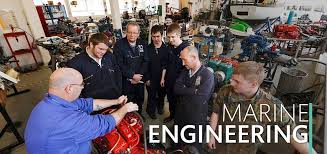
Marine Engineering


The three major aspects of Engineering in Maritime..


Naval Architecture, and Naval, Marine and Ocean Engineering are fast growing and dynamic fields with plentiful opportunities that are improving as people turn to the oceans for resources such as food, transportation and energy.
These engineers must be creative and visionary to see the potential to use transportation and the oceans effectively. Government, industry and academia are hungry for experts and researchers to develop new processes and systems to explore and travel the ocean with minimal or no danger to its habitat and environment. Marine structures, vessels and ocean systems are unique because only a small number of each design is built, they are very large and complex, and they operate in this environment.
Anything that operates in this environment has special design requirements relevant to sea-keeping, capsizing, station-keeping, and random motions and loads in a hostile environment. Due to this uniqueness, the manufacturing is often more challenging and expensive.
The impact of Naval Architecture, Marine and Ocean Engineering is far-reaching and greatly enhances our quality of life. For example:
---74% of the world’s trade is carried by ship.
---95% of the U.S. international trade is transported by ship.
---55% of the U.S. population lives within 50 miles of a coastline.
---60% of the U.S. energy is imported by ship.
Naval Engineering:
Naval engineers work on naval vessels. A naval vessel is one of the world’s largest and most complex engineered systems. It’s much more complicated to design a navy ship than almost any other form of transportation or structure. Not only is the ship critical to national defense but it has to move through the water similar to other boats and amphibious vehicles and enable a crew of hundreds to live aboard it for extended periods of time. Engineers in this field must always balance cost, new technology, hull design, materials and all of the systems aboard such as the weapons management, electronics, HV/AC, propulsion, ventilation, sleeping quarters, galley, head, etc. The real trick for the Naval Engineer is to pull all of these pieces together.


Naval architects are engineers who design all kinds of watercraft or anything that can be used as transportation on water. This may be a ship, boat, submarine, seaplane, icebreaker or offshore drilling platform. The vessels may be used for recreation, transportation, work or by the Navy and can be big or small. They may be powered by sails, nuclear power or some other propulsion system.
Marine environments can be hostile and unpredictable. One minute the seas are calm and the next can be a white knuckle ride as the waves pound the side of your boat or seagoing vessel. This unpredictability provides a challenging frontier for the naval architect.


Marine Engineering:


Naval architects may build the frame or structure of a boat but marine engineers are needed to design all of the internal power and machinery systems of the boat. Without marine engineers, the boat would have no engine, electronics, hydraulics, lighting, refrigeration, or controls. To be a good marine engineer, you must be very versatile, creative and open to learning. Marine engineering is an exciting career because every boat or ship is different and you will be responsible for every system on board. Almost every boat needs an engine, propeller, steering, transmission, pumps, electrical systems, etc. Marine engineers make it happen.
They know a lot about many different kinds of vessel systems and controls. They give millions of people the ability to have fun on jetskis, small sailboats, or vacation cruises as well as enabling the military to race across the oceans, clean oil spills or rescue other boaters in distress.

Ocean Engineering:


Every instrument, every device and every process in an ocean environment is the creation and responsibility of ocean engineers. The ocean environment is very corrosive, volatile and often unpredictable. Waves are never-ending and the devices or gear that are used to explore the environment must be able to withstand high winds, waves and salt-water. One of the great things about ocean engineering is that many different types of engineers can be a part of the solutions needed for ocean infrastructure, research and utilization.
Ocean engineering integrates disciplines such as materials science and mechanical, civil, computer, software, marine, chemical and electrical and electronics engineering. In addition to creating underwater robots (ROV’s), they also develop underwater structures, oil rigs, buoys for data collection, and they are hard at work developing ways to capture the energy of waves and turn it into electricity. city.
They develop transportation systems, plan new uses for waterways, design deep-water ports, and integrate the land and water transportation systems and methods. They are concerned with discovering, producing, and transporting offshore petroleum as well as developing new ways to protect marine wildlife and beaches.


Monday, 11 April 2016

BS in Aeronautical Engineering in the Philippine


BS in Aeronautical Engineering (BSAeroE) is a five year degree program designed to prepare students for becoming Aeronautical Engineers. The BS in Aeronautical Engineering program deals with the methods and principles of flight. It also covers engineering disciplines applied in research and development, manufacturing, operation, maintenance, repair, modification and inspection of aircrafts, spacecrafts and their components.


Subjects and Curriculum


The subjects in the BSAE curriculum are divided into two main categories:


    Technical Courses
        Mathematics: Advanced Algebra, Plane and Spherical Trigonometry, Analytic Geometry, Integral Calculus, Probability and Statistics
        Natural/Physical Sciences: General Chemistry, Physics
        Basic Engineering Sciences: Engineering Drawing, Computer Aided Drafting, Dynamics of Rigid Bodies, Engineering Management, Safety Management
        Allied Courses: Thermodynamics, Elementary Electrical Engineering, Basic Electronics
        Professional Courses: Aircraft materials and Processes, Airframe Construction and Repair, Aerodynamics, Aircraft Systems, Operations Engineering, Air Laws and Regulations, Aircraft Maintenance and Inspection, Aviation Safety, Aircraft Structure, Aircraft Design, Computer Aided Design (CAD)
        Technical Electives: Rocket Engines, Home Built Aircraft
    Non–Technical Courses
        Social Sciences: Social Science (1 to 4)
        Humanities: Humanities (1 to 3)
        Languages: English (1 to 3) , Filipino (1 and 2)
        Mandated Subject: Life and works of Rizal

The BSAeroE program makes use of several teaching methods. The five years of study are spent in classroom lectures, small group tutorials, field observations and hands-on laboratory sessions. In addition to this, students are also exposed to seminars and talks given by experts in the aerospace industry and even experience rides in a flight simulator.

Students are also exposed to an on the job training (OJT) in a duly recognized aeronautics or flight company; this is usually arranged by the school. It is done under the supervision of a senior aeronautical engineer in the firm and a faculty member. At the end of the OJT the student is evaluated for his/her performance.

As a requirement for graduation, students are required to accomplish a project feasibility study. Students are given the freedom to choose a study of interest that will help establish and improve air navigation facilities. The project ends when the student faces a committee to defend his/her work.


Is Aeronautical Engineering a profession?


Aeronautical Engineering is considered a profession.
The responsibilities of an Aeronautical Engineer include:

    Maintaining aircraft for full operation including making regular inspections, maintenance and servicing.
    Creating aircraft, components and support equipment.
    Supervising the assembly of airframes and the installation of engines, instruments and other equipment.
    Participating in flight test programs to measure take-off distances, rate of climb, stall speeds, maneuverability and landing capacities.
    Resolving issues that arise during the design, development and testing processes.
    Modifying designs to improve safety features or minimize fuel consumption and pollution.
    Working with teams, suppliers, clients and managers to agree budgets, timescales and specifications.
    Communicating technical and regulatory advice to clients, teams, suppliers and other professionals within the aerospace industry and presenting data to groups and individuals.


What are the admission requirements for the BS in Aeronautical Engineering program?

Requirements at each school may differ, but these are the common requirements:

    Must be a high school graduate.

What skills, traits and attitude will help you succeed in this course?


    Excellent Mathematical skills – math is the fundamental tool of aeronautical engineering, majority of subjects use both basic and complicated forms of mathematical equation therefore its very important to have strong foundation in mathematics
    Strong inclination to Physics – aeronautical engineering involves studying the movement of air over the structure of the aircraft, as well as the movement of all of the aircraft’s internal systems. As a result, different aspects of physics are of major importance to aeronautical engineering.
    Computer Knowledge – a wide knowledge on computers is critical to succeeding in the majority of engineering courses because much of the actual design work is done using computers.
    Technical skills – the knowledge and ability required to achieve specific tasks as well as other duties such as mathematical, engineering, scientific or computer-related tasks.
    Critical Thinking – the use of logic and reasoning to identify the strengths and weaknesses of alternative solutions, conclusions or approaches to problems.
    Graphical skills – the ability to transform a design into an image
    Analytical skills – the ability to determine how a system should work and how changes in conditions, operations, and the environment will affect outcomes
    Problem solving skills – the ability to identify complex problems and review related information to develop and evaluate options and implement solutions.
    Organizational skills – the ability to prioritize and manage time to give equal attention to each task at hand
    Communication skills – the ability to effectively relay information both orally and in written form.


How difficult is BS in Aeronautical Engineering?

Aeronautical Engineering is considered one of the most difficult fields of engineering. It involves complex math and physics topics. You’ll need to be highly competent in mathematics and physics so expect your competency in these two subjects to be rigorously tested. The BSAeroE program also demands intensive use of computers; those who have minimal computer skills will most likely find it hard to keep up. The workload in this program is quite demanding as well, you will be out in the field most of the time doing hands on practicum exams and also have constant examinations inside the classroom.

The Aeronautical Engineering Board Exam is also considered to be one of the most difficult board examinations in the Philippines.

How long does it take to complete the BSAeroE program in the Philippines?

The BSAeroE program takes five years to complete. The program may be completed in less than 5 years in schools that follow the trimestral curriculum.


Aeronautical Engineering Practice (OJT)

During the summer of the fourth year, the student is required to attend an on the job training (OJT) in an aeronautical company or firm. Students are given the opportunity to apply their knowledge and practice their skills in actual settings. The on the job training program is done under the supervision of a faculty member as well as a designated authority in the company. The length of the OJT is 420 hours (see source).

Career opportunities for BS in Aeronautical Engineering graduates


    Jobs for Licensed Aeronautical Engineers (board exam passers)

        Surveillance Aircraft Operators in the Military – operate survey equipment to determine accurate locations and directions for artillery units as well as differential positioning systems, including GPS, and distance measuring equipment
        Aircraft Interior Engineer – involved in the design or renovation of internal spaces, including structural alterations, furnishings, fixtures and fittings, lighting and colour schemes of an aircraft.
        Aircraft Structural Engineer – designs structures to withstand stresses and pressures, such as weather and human use in an aircraft or a space satellite. They ensure that structures and systems inside aircrafts remain strong and secure throughout their use.
        Aircraft Manufacturing Engineer – have a high level of technical expertise and skill, which they use to plan, design, set up, modify, optimize and monitor manufacturing processes.
        Aircraft Maintenance Engineer – installs, maintain and repair aircraft engines; airframes; airframe systems; electrical, instrument and radio systems; and aircraft structures and surface finishes.
        Aeronautical Engineering Professor – teaches aeronautical engineering in a College or University
        Aircraft System Engineer – develops aircraft sketches, drafts and designs
        Aircraft Design Engineer – performs engineering duties in designing, constructing, and testing aircraft, missiles, and spacecraft. May conduct basic and applied research to evaluate adaptability of materials and equipment to aircraft design and manufacture.
        Aircraft Power Plant Engineer – responsible for supervising, inspecting and performing maintenance on aircraft turbine engines and components.
        Aircraft Tooling Engineer – plans, directs and coordinates tooling used to manufacture and modify the aircraft as well as develop, evaluate, and improve manufacturing methods, materials and parts, fabrication processes, tooling, production equipment capabilities, assembly methods, staff allocation, and quality control standards.
        Aeronautical Engineering Consultant – provide consulting services on behalf of a private employer or he can be self-employed. Engineering consultants may also work with federal, state and local governments.
        Chief Aeronautical Engineer – responsible for the technical management and oversight of aeronautical engineering activities that they are assigned to. The Chief Engineer will ensure compliance to customer; regulatory and client’s requirements and procedures.
        Sector Operational Manager – maintain the airline’s published schedule by ensuring that the on-time arrival and departure rates are within acceptable limits for the prevalent external conditions.
        Head of Line Maintenance – manage, organize and lead the Station Engineers and staff at the stations located around the network to deliver aircraft maintenance in an efficient, effective and safe manner.

    Jobs for Non Board Passers:

        Aircraft Mechanic – maintains and repair the avionic and mechanical equipment needed to make planes and helicopters operate safely.
        Ground Radio Operator – maintain reliable operation of radio communication equipment and prepare, transmit, and record messages for ground forces
        Production Schedulers – covers the planning, scheduling, releasing, and tracking of workflow from the engineering department and the manufacturing department.
        Aircraft fueler – responsible for overseeing that all aircrafts are serviced with fuel; additionally, automotive and ground support equipment is serviced. They are also trained to handle non-routine situations, such as defueling and fueling aircraft with inoperative fuel quantity indicators.
        Simulator Technician – responsible for the performance of maintenance and reliability tests on the equipment that is used to calibrate aero and space craft; works under the direction of a supervising senior technician
        Technical Data Manager – provides info/data support to customers, representatives, airlines and government agencies, maintains all engineering files (production, project, specs, drawings, microfilm, etc. and prepares reports
        Mechanical Fitter – sets up, adjusts and inspects metalworking and pipe working machines and equipment.
        Aviation Support Equipment Technician – operate, maintain, repair and test automotive electrical systems in ground equipment, gasoline and diesel systems, and associated automotive, hydraulic and pneumatic systems. They also maintain gas turbine compressor units, ground air-conditioning units, perform metal fabrication, repair and painting of tow tractors and other aircraft servicing units.
        Aviation Records Supervisor – keeps logs and records in the maintenance department of an aviation company.
        Crew Chief Aircraft Mechanic Technician – lead, direct and support a group of maintenance Technicians and act as duty senior maintenance representative in the absence of Supervision.

    Salary Levels


    Generally speaking, salaries for licensed Aeronautical Engineers are high compared to the average salary in the Philippines. The salary levels for Aeronautical Engineers depend on work experience, position and whether they are working in the private or public sector.


source: http://www.finduniversity.ph/majors/bs-in-aeronautical-engineering-philippines/

Sunday, 10 April 2016

BS in Hotel and Restaurant Management in the Philippines.

BS in Hotel and Restaurant Management in the Philippines.
The Bachelor of Science in Hotel and Restaurant Management (BSHRM) program is geared towards equipping students with the necessary knowledge, skills and attitude to provide quality service in the hospitality industry. The program contains subjects that will address the needs of different sectors in the hospitality industry, such as culinary, front office, tourism, resort and hotel operations. Its primary concentration is on the development of practical and management skills which are achieved through the combination of theoretical classes, practicum exercises and experiential learning. 

Graduates of this course will possess business management and accounting skills to be able to compute daily sales, recipe costing/cost control and inventory management. The program also helps students to develop effective communication and interpersonal skills which are essential in establishing positive employer/employee/customer relations. 


What are the admission requirements for the BSHRM program in the Philippines?


  • Must be a high school graduate; but for students who were not able to complete secondary level of education.

What skills are required to succeed in this course?


There are no specific skills required for BSHRM because everything can be learned. However, you need to possess certain attitudes and qualities for you to succeed in this course: 
First, you have to be comfortable giving service to others. This means that you enjoy and take pride in your work; Secondly, you must be approachable and friendly while maintaining professionalism; Most importantly, you have to be an effective communicator, both in written and oral English. You will meet and provide service to different people of different nationalities, to eliminate the language barrier, you have to speak English well enough to be understood. 


How difficult is this course?


The difficulty level of BSHRM is quite low. Although there are business management and accounting subjects incorporated in its curriculum, mathematical skills are required at a very minimal level. BSHRM is a convenient course for students who are only seeking to achieve a college degree. 


Is Hotel & Restaurant Management a profession?


Hotel & Restaurant Management is not considered a profession. It does not have a specific and peculiar set of theoretical knowledge that can only be understood by students taking the course. It also does not entail great responsibility and accountability as most professions do. 


How long does it take to complete the BS in in Hotel and Restaurant Management course in the Philippines?


The BSHRM program takes 4 years to complete. 
The duration is spent in classrooms for theoretical classes, practicum exercises and on the job training/practicum program ( local or international ). 


Training and internship


There are certain schools that have partnered with international business establishments in the hospitality industry that offer internships for students who can afford the expenses to go abroad. 
Before students are immersed in hotels and restaurants, they have to undergo a hands on test first. For example, if the topic is bar tending, the student will usually perform this in-front of a designated teacher who will taste and assess his skills. By the end of the exercise, the teacher will grade and inform the student if he is indeed ready to be placed in a practicum program with a certain establishment. 
According to CHED (the official governing body of both public and private higher education institutions), the suggested number of hours for on the job training required for the BSHRM program is 420 hours. (Seehttp://pinoyhotelier.com/bshrm–ched–suggested–practicum–program.html

Career opportunities for BSHRM graduates


  • Entry Level jobs

    Jobs designated for recent/fresh graduates of BSHRM who have no prior experience.
    • Commis – junior chef
    • F&B service attendant – a person who takes customer orders, ensures tables are clear and carries dishes back to the kitchen area
    • Bartender or bar attendant – a person who serves alcoholic beverages; responsibilities include maintaining supplies and inventory for the bar and mixing a variety of cocktails
    • Housekeeping attendant – a person who cleans, changes linens and places things in order in hotel rooms
    • Front Office agent/Front Desk clerk – a person who takes charge of guest reception inquiries and reservations, checks in guests upon arrival as well as giving the best customer service to promote a positive first impression


  • Advanced Positions

    Require years of experience and practice to perform certain jobs.
    • Food and Beverage Director – manages the whole operation and control of the food and beverage department
    • Restaurant Operations Manager – responsible in overseeing the entire planning, directing and coordinating operations of a restaurant; they are also tasked to do financial record keeping, hiring, handling and firing of employees
    • Front Office Staff and Manager – supervises front office personnel and ensures that all front desk duties are properly completed; they are also responsible in the preparation of the budget for the front office department
    • Cruise Line Staff – maintains passenger cabins and runs the restaurant, bar, recreation area and retail shops inside a cruise ship
    • Executive Housekeeper – supervises activities of cleaning personnel to ensure well kept hotel rooms
    • Chef – a chef is someone in charge of the whole food service operation including menu planning, purchasing, hiring and staffing
    • Food Service Consultant – independent professionals who have a wide knowledge and experience on food service and the hospitality industry, they serve as advisor to people and help them achieve their goals
    • Academician – a graduate of BSHRM who teaches at a college
  • Jobs not related to BSHRM that graduates can apply to

    • Call center agent – answers phone calls and inquiries of clients and provides customer support, usually to people from other countries
    • Freelancer working online – doing online jobs for clients abroad, such as data entry, article writing, SEO, customer support, administrative support etc., which mainly depends on your skills
    • Administrative Staff – personnel responsible for the organization and management of office duties and tasks; positions that include office secretary, personal assistant and office clerk


  • Career Opportunities Abroad

    BSHRM graduates are one of the most sought after employees in terms of work abroad. Career opportunities are more or less the same with the above mentioned job positions. The salary levels can be 3 to 6 times higher then in the Philippines.


source: http://www.finduniversity.ph/majors/bs-in-hotel-and-restaurant-management-philippines/

Available Courses For Enrollment

Available Courses For Enrollment


    Education

        Bachelor of Elementary Education

        Bachelor of Secondary Education

        Bachelor of Technical Teacher Education

        BS in Industrial Education

    Architecture

        BS in Architecture

        BS in Landscape Architecture

    Administration

        BS in Office Administration

        BS in Customs Administration

        BS in Public Administration

        AB in Public Administration

        BS in Legal Management

        BS in Foreign Service

        BS in Secretarial Administration

    Agriculture

        BS in Agriculture

        BS in Agricultural Engineering

        Bachelor of Agricultural Technology

        BS in Forestry

        BS in Fisheries and Aquatic Resources

        BS in Agribusiness

        BS in Agricultural Entrepreneurship

    Aircraft & Aviation

        BS in Aircraft Maintenance Technology

        BS in Aeronautical Engineering

    Arts and Design

        Bachelor of Fine Arts

        AB in Multimedia Arts

        BS in Interior Design

        AB in Film & Audio-Visual Communicationsummary

    Business

        BS in Business Administration

        BS in Accountancy

        BSBA in Marketing Management

        BSBA in Financial Management

        BSBA in Human Resource Development Management

        BSBA in Management

        BS in Accounting Technology

        BS in Entrepreneurship

        BSBA in Management Accounting

        BSBA in Operations Management

        BS in Entrepreneurial Management

        AB in Economics

        BSBA in Banking and Finance

        BS in Management Accounting

        BS in Agribusiness

        BS in Economics

        BS in Business Economics

        BS in Marketing

        BS in Advertising and Public Relations

        BS in Agricultural Entrepreneurship

    Communication & Information Science

        AB in Communication

        AB in Mass Communication

        Bachelor of Library and Information Science

        AB in Journalism

        BS in Developmental Communication

        AB in Broadcast Communication

        Bachelor of Mass Communication

        BS in Advertising and Public Relations

        BS in Mass Communication

        AB in Broadcast Journalism

        AB in Film & Audio-Visual Communication

    Engineering

        BS in Civil Engineering

        BS in Marine Engineering

        BS in Electronics & Communications Engineering

        BS in Electrical Engineering

        BS in Mechanical Engineering

        BS in Computer Engineering

        BS in Industrial Engineering

        BS in Chemical Engineering

        BS in Agricultural Engineering

        BS in Aeronautical Engineering

        BS in Geodetic Engineering

        BS in Mining Engineering

        BS in Construction Engineering and Management

        BS in Manufacturing Engineering

        BS in Metallurgical Engineering

        BS in Ceramic Engineering

        BS in Biological Engineering

        BS in Geological Engineering

        BS in Materials Science Engineering

        BS in Software Engineering

    Humanities

        AB in Philosophy

        AB in History

        AB in Literature

        AB in Creative Writing

    IT, Computer Science & Programming

        BS in Information Technology

        BS in Computer Science

        BS in Computer Engineering

        BS in Information Systems

        BS in Information and Communications Technology

        BS in Software Engineering

    Language

        AB in English

        AB in Filipino

    Maritime

        BS in Marine Transportation

        BS in Marine Engineering

    Medical & Healthcare

        BS in Nursing

        BS in Medical Technology

        BS in Pharmacy

        BS in Physical Therapy

        BS in Radiologic Technology

        BS in Nutrition and Dietetics

        BS in Respiratory Therapy

        BS in Occupational Therapy

        Bachelor of Medicine/Surgery

        BS in Midwifery

        BS in Clinical Pharmaceutical Sciences

        BS in Allied Health Technologies

        Bachelor of Health Sciences in Dentistry

    Music

        Bachelor of Music in Music Education

    Professional & Technical Courses

        BS in Industrial Technology

        Bachelor of Technical Teacher Education

        Bachelor of Agricultural Technology

        BS in Aircraft Maintenance Technology

        BS in Food Technology

        BS in Computer Technology

    Religion & Theology

        AB in Theology

    Science

        BS in Biology

        BS in Mathematics

        BS in Chemistry

        BS in Environmental Science

        BS in Geology

        BS in Applied Mathematics

        BS in Applied Physics

        BS in Physics

        BS in Marine Biology

        BS in Statistics

        AB in Mathematics

        BS in BioChemistry

        BS in Biological Engineering

        BS in Zoology

        BS in Geological Engineering

    Social Science

        BS in Criminology

        BS in Psychology

        AB in Political Science

        BS in Social Work

        AB in Psychology

        AB in Sociology

        BS in Community Development

        AB in Social Science

        BS in Foreign Service

        BS in Industrial & Organizational Psychology

        BS in Clinical Psychology

    Tourism, Hospitality & Culinary

        BS in Hotel and Restaurant Management

        BS in Tourism Management

        BS in Hospitality Management

        BS in Tourism

        BS in Travel Management

        BS in International Hospitality Management

Master's programs


    Education

        MA in Education

        MA in Educational Management

        Master in Educational Management

    Law

        Bachelor of Laws

    Administration

        Master of Public Administration

    Business

        Master of Business Administration

        Master in Management

        MA in Economics

        MS in Accountancy

        MS in Economics

    Communication & Information Science

        MA in Communication

        Master in Library and Information Science

    Engineering

        MS in Management Engineering

        Master of Engineering in Electronics and Communications Engineering

        Master of Engineering in Electrical Engineering

        Master of Engineering in Computer Engineering

        Master of Engineering in Mechanical Engineering

    Humanities

        MA in Philosophy

        MA in History

        MA in English and Literature

    IT, Computer Science & Programming

        Master in Information Technology

        MS in Information Technology

        Master of Engineering in Computer Engineering

    Language

        MA in English

        MA in English and Literature

    Medical & Healthcare

        MA in Nursing

        MS in Nursing

        MS in Public Health

    Science

        MS in Chemistry

        MA in Mathematics

        MS in Physics

        MS in Environmental Science

        MS in Biology

        MS in Mathematics

        MS in Microbiology

        MA in Physics

    Social Science

        MA in Psychology

        MA in Guidance and Counseling

        MS in Psychology

        MA in Political Science

        MA in Sociology

        MS in Rural Development

        MS in Guidance and Counseling

Doctorate programs


    Education

        Doctor of Education

        PhD in Educational Management

        PhD in Education

    Administration

        Doctor of Public Administration

    Business

        Doctor in Business Administration

        PhD in Management

    Humanities

        Doctor of Philosophy

    Medical & Healthcare

        Doctor of Medicine

        Doctor of Dental Medicine

        Doctor of Veterinary Medicine

        Doctor of Optometry

Certificate/Associate programs


    Education

        Associate in Health Science Education

        Certificate in Professional Education

        Diploma in Special Education

    Administration

        Front Office Services NC II

        Office Package

    Agriculture

        Diploma in Agricultural Technology

    IT, Computer Science & Programming

        Associate in Computer Science

        Certificate of Computer Programming

    Medical & Healthcare

        Diploma in Midwifery

        Associate in Health Science Education

    Professional & Technical Courses

        Associate in Computer Technology

        Diploma in Agricultural Technology

        Computer Technician Course

        Computer Hardware Servicing NCII

    Tourism, Hospitality & Culinary

        Associate in Hotel & Restaurant Management

        Front Office Services NC II

        Bartending NC II

        Housekeeping NC II

        Commercial Cooking NC II

        Food And Beverage Services NC II

        Baking and Pastry Production NC II

Source: finduniversity.ph